A Reflective Account of the Constituents of the Psychiatric Therapeutic Alliance
By Dr F Ian Curtis, MB BS (Hons) · FRANZCP · FAChAM | First published: 18 July 2026
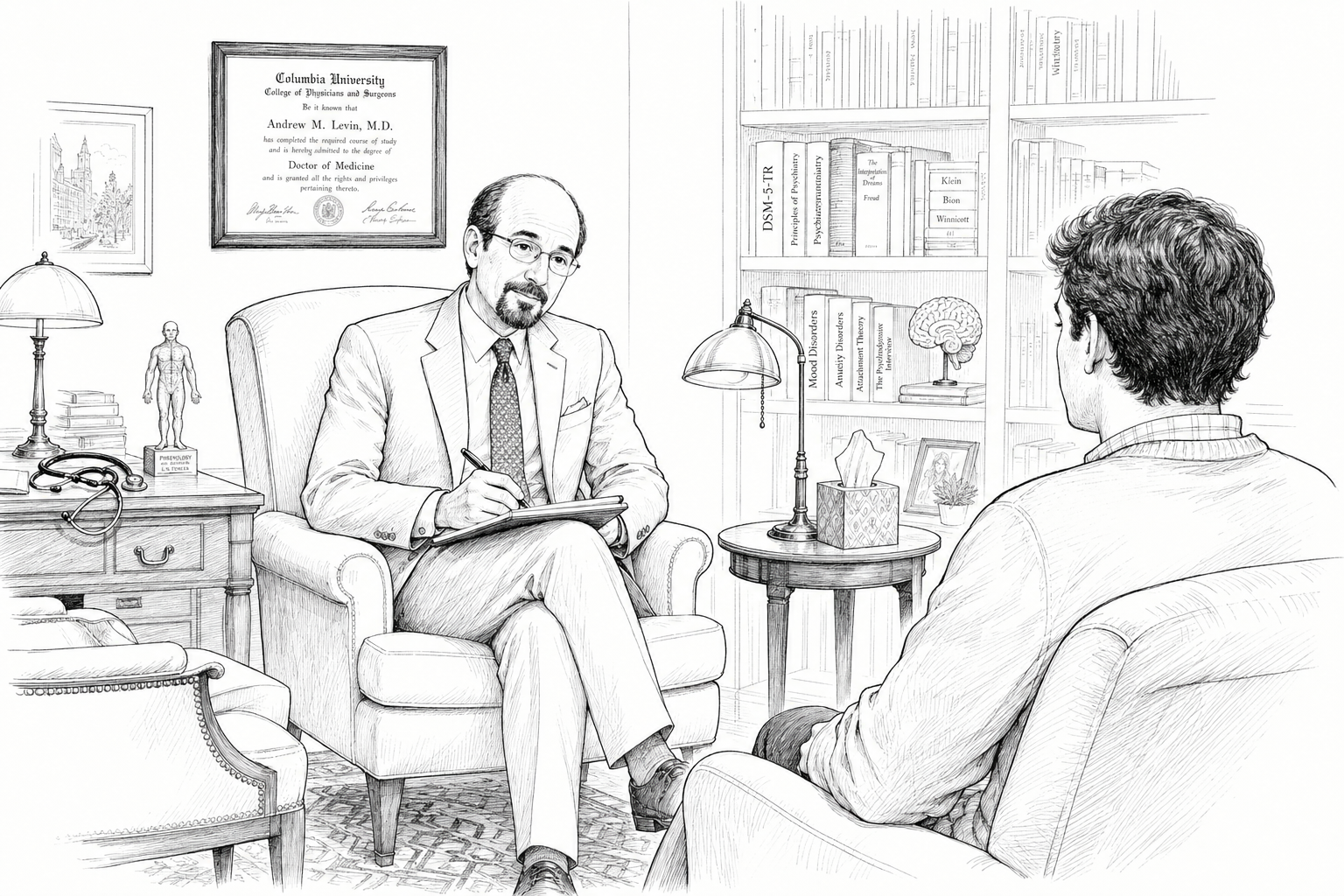
The consulting room: where the therapeutic alliance is forged.
Introduction
The psychiatric encounter is, at its heart, a human meeting. Long before any medication is prescribed or any structured psychotherapy is delivered, a set of interpersonal and procedural conditions must be established that make change possible. These conditions — the so-called therapeutic ingredients — are not incidental garnish to the technical work of psychiatry. They are the skeletal structure upon which every diagnostic formulation, every pharmacological trial, every psychotherapeutic intervention, and every monitoring review is hung.
The concept has a long empirical pedigree. Carl Rogers identified empathy, unconditional positive regard, and congruence as the necessary and sufficient conditions for therapeutic personality change1. Edward Bordin later reformulated the working alliance as a tripartite structure of bond, tasks, and goals — a pan-theoretical model applicable to any change-oriented relationship2. The most recent meta-analytic synthesis of 295 studies covering more than 30,000 patients confirms a robust alliance–outcome association (r = .278) that holds across theoretical orientations, treatment modalities, patient characteristics, and countries3. A 2023 World Psychiatry review by Wampold and Flückiger extends the same evidence base explicitly into mental health care of every kind, including pharmacotherapy and monitoring encounters4.
What follows is a working catalogue of the therapeutic ingredients intrinsic to the psychiatric therapeutic alliance, each explained with clinical examples drawn from the kind of everyday consulting-room work with which any senior clinician will be familiar. A concluding summary considers why these ingredients are properly understood not as soft skills or bedside manner, but as the load-bearing architecture of psychiatric practice.
The Therapeutic Ingredients — A Working List
The ingredients below overlap and reinforce one another. They are separated here for clarity of exposition, not because they operate in isolation in the consulting room.
-
The therapeutic bond — trust, warmth, mutual regard
-
Empathy — accurate emotional attunement
-
Unconditional positive regard — non-judgemental acceptance
-
Congruence and authenticity — the clinician as a real person
-
Agreement on goals — shared vision of what treatment is for
-
Agreement on tasks — shared understanding of how change happens
-
Collaboration and shared decision-making
-
Instillation of hope and positive expectancy
-
Containment and the holding environment
-
Consistency, reliability, and boundaries as a therapeutic frame
-
Cultural humility and contextual attunement
-
Rupture recognition and repair
-
Psychoeducation and shared meaning-making
-
Reflective monitoring and feedback-informed care
-
The clinician’s use of self — countertransference as instrument
The Ingredients Explained
1. The Therapeutic Bond
The bond is the affective quality of the relationship — the sense, on the patient’s side, that this clinician is on their side, and on the clinician’s side, that this patient can be genuinely worked with. Bordin placed the bond alongside tasks and goals as one of the three pillars of the working alliance5, and cumulative meta-analytic work continues to identify it as among the strongest common predictors of outcome across modalities6.
Example. A patient with recurrent depression and a history of premature disengagement from three previous psychiatrists arrives for a first appointment already braced for another dismissal. The psychiatrist meets her at the door, sits at the same eye-level, uses her preferred name, asks what has been most frustrating about previous experiences of care, and does not reach for the prescription pad in the first thirty minutes. By the end of the session she says, unprompted, “I feel like you actually want to help.” That sentence is the bond taking hold — and it is what will determine whether she returns for the second appointment and takes the antidepressant that will be started at the third.
2. Empathy
Empathy is more than sympathetic feeling; it is the accurate perception of another’s internal state, communicated back in a way that the other person can recognise. It is a skill that can be practised, sharpened, and, importantly, checked. The updated meta-analysis by Elliott, Bohart, Watson and Murphy, drawing on 82 independent samples and more than 6,000 clients, identifies therapist empathy as a medium-sized, robust predictor of outcome7.
Example. A veteran presents for review of post-traumatic stress disorder. He describes, flatly, an incident from deployment. Rather than moving straight to symptom counts, the psychiatrist says quietly, “It sounds as though there was a moment in that room when you thought you were about to die, and part of you is still there.” The patient’s eyes fill; he nods; the session shifts register. Empathy here is not a soothing platitude — it is a precise, tentative naming of what has been left unsaid. Its accuracy is what earns the patient’s trust to say more.
3. Unconditional Positive Regard
Rogers’ term refers to a stance of non-judgemental valuing of the patient as a person, distinct from approval of every behaviour8. In psychiatric practice, where patients frequently present shame-laden material — self-harm, substance use, sexual behaviour, aggression, offending — the capacity to receive such disclosures without visible flinch, moral colouring, or premature reassurance is a specific technical skill.
Example. A young man discloses, haltingly, that during a psychotic episode he assaulted his mother. The psychiatrist neither minimises (“these things happen”) nor recoils. She says, “That must be a very heavy thing to carry, and it took courage to tell me. Let’s understand what was happening for you at the time.” The patient’s subsequent willingness to accept depot antipsychotic medication, and to attend family therapy, rests on that moment of unjudged reception.
4. Congruence and Authenticity
Congruence — the clinician’s inner experience matching their outward presentation — is the antidote to a hollow professionalism9. Patients, particularly those with trauma histories or personality difficulties, are exquisitely sensitive to phoniness. The genuine clinician is willing, within limits, to acknowledge uncertainty, admit when they have got something wrong, and be affected by what they hear.
Example. Asked by a patient with treatment-resistant depression, “Do you actually think this will work?”, the psychiatrist replies, “Honestly, I can’t promise it will. What I can tell you is that this combination has helped people whose picture looks like yours, and if the first six weeks aren’t moving us in the right direction, we will change course together.” The candour of that answer, more than any reassurance, tends to consolidate the alliance.
5. Agreement on Goals
An alliance cannot form around goals that have never been explicitly negotiated. Bordin identified goal agreement as one of the three constituent elements of the working alliance10. In psychiatric work the risk is that the clinician’s goals (symptom reduction, adherence, risk containment) diverge silently from the patient’s (returning to work, sleeping through the night, being able to visit their grandchildren, no longer feeling like a burden). Time spent surfacing and reconciling these is not preliminary — it is the treatment beginning.
Example. An NDIS functional-capacity review for a man with schizoaffective disorder becomes far more useful when the psychiatrist asks, “If we get this right over the next twelve months, what would you be doing that you’re not doing now?” His answer — “walking my dog to the shops on my own” — becomes the concrete goal against which medication changes, community supports, and monitoring intervals are all calibrated.
6. Agreement on Tasks
Tasks are the “how” of treatment: taking a medication daily, keeping a sleep diary, attending weekly psychology, completing exposure exercises, engaging in TMS sessions, attending review appointments. Task agreement is the second of Bordin’s three alliance components11, and alliance suffers when the patient does not understand, or does not accept, the rationale for a given task.
Example. A woman with obsessive-compulsive disorder is offered exposure and response prevention. Rather than simply referring, the psychiatrist takes ten minutes to explain the mechanism — that the anxiety curve falls of its own accord if compulsions are resisted — and asks her to predict what she thinks will happen. Her buy-in to the task, once she understands why it should work, is what makes the referral stick.
7. Collaboration and Shared Decision-Making
Shared decision-making is the operational expression of the alliance in the choice of treatment. Wampold and Flückiger, extending the alliance construct explicitly to mental health care, place collaboration and mutual agency at the centre of what the clinician contributes to outcome12. It is particularly consequential in psychiatry, where trade-offs between efficacy, side-effect burden, and personal values are seldom obvious.
Example. A woman with bipolar I disorder, planning a pregnancy, is presented with the options for mood stabilisation across the perinatal period — the relative teratogenic risks of sodium valproate, lithium, and lamotrigine; the risks of untreated illness; the possibility of adjunctive psychological therapy. The psychiatrist lays out the landscape, offers a recommendation, and invites her and her partner to weigh it. The decision they reach together — to switch from valproate to lamotrigine three months before conception — is one she will adhere to precisely because she made it.
8. Instillation of Hope and Positive Expectancy
Jerome Frank, in his classic comparative analysis of the healing arts, placed the mobilisation of hope at the centre of every effective therapeutic encounter and identified an emotionally charged confiding relationship, a healing setting, a plausible rationale, and a shared ritual for change as the features common to all psychotherapies13. Demoralisation is itself a driver of psychiatric symptom burden; its reversal is often the first therapeutic movement. Hope, however, must be truthful — false reassurance corrodes the alliance the moment reality contradicts it.
Example. A young woman with a first episode of psychosis, terrified that she will never study again, is told: “Most people who have what you have had, if they take the medication and stay engaged with the team, go back to a life that looks a lot like the one they had before. It may take longer than you want. I have seen it happen many times.” That sentence — specific, evidence-consistent, personally addressed — is a therapeutic act.
9. Containment and the Holding Environment
Drawn from Bion’s account of containment14 and Winnicott’s concept of the facilitating environment15, these ideas describe the clinician’s capacity to receive the patient’s unbearable affect — terror, rage, despair — without being destabilised, and to metabolise it into something more thinkable. The consulting room itself, its predictability and safety, forms the outer layer of a holding environment in which such containment becomes possible.
Example. A patient with borderline personality disorder telephones between appointments in acute distress, threatening self-harm. The psychiatrist, having agreed a between-session contact protocol in advance, listens without panic, reflects the intensity of the feeling, reminds the patient of the plan they built together, and holds the frame of the next scheduled appointment. The absence of alarm on the clinician’s side is itself containing.
10. Consistency, Reliability, and the Therapeutic Frame
The frame — the reliable structure of appointment times, session length, fees, confidentiality, and between-session contact — is a therapeutic instrument in its own right. Winnicott’s facilitating environment provides the theoretical basis16: patients with disorganised early attachments particularly benefit from experiencing an object that behaves predictably. Breaches of the frame (running over, cancelling, being unreachable) are not mere administrative slips; they are alliance events.
Example. A patient with complex trauma, seen fortnightly at 3pm on Thursdays, notices that the psychiatrist has, over six months, never once been late, never once cut a session short, and always been reachable via the agreed channels. She says, in the seventh month, “You’re the first person I’ve trusted since my father died.” The frame did that work.
11. Cultural Humility and Contextual Attunement
The alliance is built across differences of culture, language, faith, gender, sexuality, age, socioeconomic circumstance, and, in the Australian context, Indigenous identity and history. The Norcross and Lambert third edition of Psychotherapy Relationships That Work devotes a full volume to adapting the relationship to the individual patient and their context17. Cultural humility — a stance of respectful not-knowing, of willingness to be taught by the patient about their own world — is a therapeutic ingredient distinct from mere cultural competence.
Example. An Aboriginal man from a remote community, referred for assessment of “psychotic symptoms”, speaks of hearing his deceased grandmother’s voice giving him counsel. Rather than moving straight to diagnosis, the psychiatrist asks about the cultural meaning of such experiences in his community, consults an Aboriginal mental health worker, and formulates the presentation in a way that neither pathologises normative cultural experience nor misses genuine illness. The patient later says he came back because “you didn’t just call me mad”.
12. Rupture Recognition and Repair
Ruptures — moments of tension, withdrawal, or overt disagreement in the alliance — are inevitable, and their skilled repair is one of the most potent therapeutic events available. Safran and Muran’s relational treatment guide sets out a systematic framework for detecting and repairing such ruptures, and their program of research has shown that alliances that rupture and are repaired can outperform alliances that appear smooth throughout18.
Example. A patient arrives late, arms folded, and complains that at the last session the psychiatrist “wasn’t really listening”. The temptation to defend is resisted. Instead: “You may well be right — tell me what you noticed.” The patient describes it. The psychiatrist acknowledges the lapse, apologises, and asks how they might work differently. The alliance, at the end of that session, is stronger than before the rupture.
13. Psychoeducation and Shared Meaning-Making
Psychoeducation is not the recitation of diagnostic criteria; it is the collaborative construction of a story that makes the patient’s experience intelligible and treatable. Frank called this the “rationale or myth” that any healing practice provides — a shared explanatory framework whose plausibility to the patient is itself therapeutic19.
Example. A man presenting with panic disorder is shown, on a whiteboard, the cycle of catastrophic misinterpretation, autonomic arousal, and avoidance. He says, “So the sensations aren’t dangerous — it’s what I do with them that keeps it going.” That reframe, arrived at together, becomes the pivot on which cognitive-behavioural work and, if needed, an SSRI, can proceed.
14. Reflective Monitoring and Feedback-Informed Care
Monitoring is not a bureaucratic overlay but a therapeutic ingredient in its own right. Systematic use of outcome measures (K10, PHQ-9, GAD-7, PCL-5, YBOCS, side-effect scales, quality-of-life measures) and, crucially, session-by-session alliance measures allows drift to be detected early and non-response to be acted on. Lambert and Shimokawa’s work on client feedback has shown that simply feeding back progress and alliance data to clinicians measurably improves outcomes and reduces deterioration, particularly in cases that are not responding20. Wampold has argued that the effective therapist is precisely the one who monitors, seeks feedback, and adjusts21.
Example. At each monthly review of a patient on a complex regimen for treatment-resistant depression, the psychiatrist reviews a PHQ-9 trajectory graph with the patient, notes side-effect scores, and asks two brief alliance questions. When the alliance rating drops from 9 to 6 in a single session, this is discussed directly — and reveals that the patient has felt dismissed since a rushed telehealth review. The rupture is repaired, the regimen is unchanged, and adherence — which had been silently faltering — is restored.
15. The Clinician’s Use of Self
The clinician’s own emotional responses to the patient — irritation, protectiveness, boredom, sexual awareness, dread, hope — are diagnostic data. Bion’s account of the analyst’s reverie as an instrument for metabolising the patient’s projected experience remains foundational22. Reflective practice, supervision, and, where appropriate, personal therapy are the maintenance regime for this instrument.
Example. A senior psychiatrist notices that he consistently runs five minutes over with one particular patient, and consistently forgets to bill for those minutes. Reflected on in supervision, this points to a rescuing dynamic in response to the patient’s pervasive sense of neglect. Recognising it allows him to hold the frame more firmly, which — paradoxically — is what the patient most needs.
Summary — The Skeletal Structure of Psychiatric Therapy
It is tempting, in an era of increasingly sophisticated pharmacology, neurostimulation, and manualised psychotherapies, to regard the therapeutic ingredients described above as the soft tissue of psychiatric practice — pleasant, humane, but subordinate to the “real” work of diagnosis and intervention. The evidence, and clinical experience, suggest the opposite. These ingredients are the skeleton. A converging body of meta-analytic work spanning more than 300 studies and 30,000 patients now places the alliance and its constituent relational elements among the most reliable known determinants of psychiatric and psychotherapeutic outcome23, and the World Psychiatry synthesis extends the same conclusion explicitly into pharmacotherapy, monitoring, and mental health care of every kind24.
A skeleton is not glamorous. It is rarely admired in itself. It is, however, what allows every other structure — muscle, organ, movement — to hold its shape and do its work. So it is with the therapeutic alliance and its constituent ingredients. A well-chosen antipsychotic delivered into a broken alliance is a molecule discarded. A brilliant formulation offered without empathy is a document unread. A rigorous monitoring protocol imposed without collaboration is a form filled in and quietly resented. Conversely, a modest intervention delivered within a strong alliance — a small dose adjustment, a well-timed reflection, a psychoeducational sketch on the back of an envelope — can be transformative.
For the psychiatrist, then, the disciplined cultivation of these ingredients is not an ornament to practice but its foundational technical skill. Bond, empathy, positive regard, congruence, agreement on goals and tasks, collaboration, hope, containment, a reliable frame, cultural humility, rupture repair, shared meaning-making, feedback-informed monitoring, and the reflective use of self — together they form the load-bearing architecture within which pharmacology, psychotherapy, and monitoring can each do the specific work they are designed to do.
To attend to them consistently, session by session, patient by patient, across a long career, is not a departure from technical psychiatry. It is technical psychiatry, in its most fundamental form.
A Note on Supervisory Use and a Personal Debt to Jerome Frank
A list of fifteen or more explicitly named therapeutic ingredients also has a very practical value in the supervision of mental health trainees. Rather than offering the trainee only global feedback about “rapport” or “style”, the supervisor and supervisee can move through the ingredients as a shared checklist against which a recorded or recounted session is examined: Was the bond formed, and how? Was empathy accurate and communicated? Were goals and tasks explicitly negotiated, or silently assumed? Was hope offered truthfully? Was the frame held? Was a rupture noticed, and if so, repaired? Were monitoring data actually looked at with the patient (see Lambert & Shimokawa, 2011)? Used this way, the ingredients become both a formative teaching scaffold and a summative assessment framework — one that names the invisible relational work of psychiatry with enough specificity that it can be observed, discussed, practised, and improved. In my own experience of supervising registrars, this kind of granular naming has repeatedly turned inchoate discomfort about a difficult case into a concrete learning task.
On a personal note, my own introduction to the importance of these therapeutic ingredients came, in the second half of the twentieth century, through the writings of Jerome Frank — first in the successive editions of Persuasion and Healing (Frank & Frank, 1991) and through his lectures and papers on the common features of all effective psychotherapies. Frank’s central observation — that beneath the surface variety of psychotherapeutic schools lay a small set of shared, humanly universal ingredients: an emotionally charged confiding relationship, a healing setting, a plausible rationale, and a ritual for change — was, for me, genuinely transformative. It shifted my attention, early in my clinical formation, from the tribal question of which school one belonged to, towards the far more useful question of what one was actually doing, moment by moment, with and for the patient. Much of what I have since tried to hone as clinical skill, and much of what I have tried to pass on in supervision, is in a direct line of descent from Frank’s calm, empirically minded, deeply humane insistence that the psychotherapies work, when they work, because of what they share.
References
Bordin, E. S. (1979). The generalizability of the psychoanalytic concept of the working alliance. Psychotherapy: Theory, Research & Practice, 16(3), 252–260. https://doi.org/10.1037/h0085885
Rogers, C. R. (1957). The necessary and sufficient conditions of therapeutic personality change. Journal of Consulting Psychology, 21(2), 95–103. https://doi.org/10.1037/h0045357
Flückiger, C., Del Re, A. C., Wampold, B. E., & Horvath, A. O. (2018). The alliance in adult psychotherapy: A meta-analytic synthesis. Psychotherapy, 55(4), 316–340. https://doi.org/10.1037/pst0000172
Wampold, B. E., & Flückiger, C. (2023). The alliance in mental health care: conceptualization, evidence and clinical applications. World Psychiatry, 22(1), 25–41. https://doi.org/10.1002/wps.21035
Elliott, R., Bohart, A. C., Watson, J. C., & Murphy, D. (2018). Therapist empathy and client outcome: An updated meta-analysis. Psychotherapy, 55(4), 399–410. https://doi.org/10.1037/pst0000175
Frank, J. D., & Frank, J. B. (1991). Persuasion and Healing: A Comparative Study of Psychotherapy (3rd ed.). Baltimore: Johns Hopkins University Press. https://jhupbooks.press.jhu.edu/title/persuasion-and-healing
Bion, W. R. (1962). Learning from Experience. London: Heinemann. https://archive.org/details/learningfromexpe0000wrbi
Winnicott, D. W. (1965). The Maturational Processes and the Facilitating Environment: Studies in the Theory of Emotional Development. London: The Hogarth Press and the Institute of Psycho-Analysis. https://archive.org/details/maturationalproc0000dwwi
Safran, J. D., & Muran, J. C. (2000). Negotiating the Therapeutic Alliance: A Relational Treatment Guide. New York: The Guilford Press. https://www.guilford.com/books/Negotiating-the-Therapeutic-Alliance/Safran-Muran/9781572308695
Lambert, M. J., & Shimokawa, K. (2011). Collecting client feedback. Psychotherapy, 48(1), 72–79. https://doi.org/10.1037/a0022238
Wampold, B. E., & Imel, Z. E. (2015). The Great Psychotherapy Debate: The Evidence for What Makes Psychotherapy Work (2nd ed.). New York: Routledge. https://doi.org/10.4324/9780203582015
Norcross, J. C., & Lambert, M. J. (Eds.). (2019). Psychotherapy Relationships That Work, Volume 1: Evidence-Based Therapist Contributions (3rd ed.). New York: Oxford University Press. https://academic.oup.com/book/30015
Footnotes
-
Rogers, C. R. (1957). The necessary and sufficient conditions of therapeutic personality change. Journal of Consulting Psychology, 21(2), 95–103. https://doi.org/10.1037/h0045357 ↩
-
Bordin, E. S. (1979). The generalizability of the psychoanalytic concept of the working alliance. Psychotherapy: Theory, Research & Practice, 16(3), 252–260. https://doi.org/10.1037/h0085885 ↩
-
Flückiger, C., Del Re, A. C., Wampold, B. E., & Horvath, A. O. (2018). The alliance in adult psychotherapy: A meta-analytic synthesis. Psychotherapy, 55(4), 316–340. https://doi.org/10.1037/pst0000172 ↩
-
Wampold, B. E., & Flückiger, C. (2023). The alliance in mental health care: conceptualization, evidence and clinical applications. World Psychiatry, 22(1), 25–41. https://doi.org/10.1002/wps.21035 ↩
-
Bordin, E. S. (1979). The generalizability of the psychoanalytic concept of the working alliance. Psychotherapy: Theory, Research & Practice, 16(3), 252–260. https://doi.org/10.1037/h0085885 ↩
-
Flückiger, C., Del Re, A. C., Wampold, B. E., & Horvath, A. O. (2018). The alliance in adult psychotherapy: A meta-analytic synthesis. Psychotherapy, 55(4), 316–340. https://doi.org/10.1037/pst0000172 ↩
-
Elliott, R., Bohart, A. C., Watson, J. C., & Murphy, D. (2018). Therapist empathy and client outcome: An updated meta-analysis. Psychotherapy, 55(4), 399–410. https://doi.org/10.1037/pst0000175 ↩
-
Rogers, C. R. (1957). The necessary and sufficient conditions of therapeutic personality change. Journal of Consulting Psychology, 21(2), 95–103. https://doi.org/10.1037/h0045357 ↩
-
Rogers, C. R. (1957). The necessary and sufficient conditions of therapeutic personality change. Journal of Consulting Psychology, 21(2), 95–103. https://doi.org/10.1037/h0045357 ↩
-
Bordin, E. S. (1979). The generalizability of the psychoanalytic concept of the working alliance. Psychotherapy: Theory, Research & Practice, 16(3), 252–260. https://doi.org/10.1037/h0085885 ↩
-
Bordin, E. S. (1979). The generalizability of the psychoanalytic concept of the working alliance. Psychotherapy: Theory, Research & Practice, 16(3), 252–260. https://doi.org/10.1037/h0085885 ↩
-
Wampold, B. E., & Flückiger, C. (2023). The alliance in mental health care: conceptualization, evidence and clinical applications. World Psychiatry, 22(1), 25–41. https://doi.org/10.1002/wps.21035 ↩
-
Frank, J. D., & Frank, J. B. (1991). Persuasion and Healing: A Comparative Study of Psychotherapy (3rd ed.). Johns Hopkins University Press. https://jhupbooks.press.jhu.edu/title/persuasion-and-healing ↩
-
Bion, W. R. (1962). Learning from Experience. London: Heinemann. https://archive.org/details/learningfromexpe0000wrbi ↩
-
Winnicott, D. W. (1965). The Maturational Processes and the Facilitating Environment: Studies in the Theory of Emotional Development. London: The Hogarth Press and the Institute of Psycho-Analysis. https://archive.org/details/maturationalproc0000dwwi ↩
-
Winnicott, D. W. (1965). The Maturational Processes and the Facilitating Environment: Studies in the Theory of Emotional Development. London: The Hogarth Press and the Institute of Psycho-Analysis. https://archive.org/details/maturationalproc0000dwwi ↩
-
Norcross, J. C., & Lambert, M. J. (Eds.). (2019). Psychotherapy Relationships That Work, Volume 1: Evidence-Based Therapist Contributions (3rd ed.). New York: Oxford University Press. https://academic.oup.com/book/30015 ↩
-
Safran, J. D., & Muran, J. C. (2000). Negotiating the Therapeutic Alliance: A Relational Treatment Guide. New York: The Guilford Press. https://www.guilford.com/books/Negotiating-the-Therapeutic-Alliance/Safran-Muran/9781572308695 ↩
-
Frank, J. D., & Frank, J. B. (1991). Persuasion and Healing: A Comparative Study of Psychotherapy (3rd ed.). Johns Hopkins University Press. https://jhupbooks.press.jhu.edu/title/persuasion-and-healing ↩
-
Lambert, M. J., & Shimokawa, K. (2011). Collecting client feedback. Psychotherapy, 48(1), 72–79. https://doi.org/10.1037/a0022238 ↩
-
Wampold, B. E., & Imel, Z. E. (2015). The Great Psychotherapy Debate: The Evidence for What Makes Psychotherapy Work (2nd ed.). New York: Routledge. https://doi.org/10.4324/9780203582015 ↩
-
Bion, W. R. (1962). Learning from Experience. London: Heinemann. https://archive.org/details/learningfromexpe0000wrbi ↩
-
Flückiger, C., Del Re, A. C., Wampold, B. E., & Horvath, A. O. (2018). The alliance in adult psychotherapy: A meta-analytic synthesis. Psychotherapy, 55(4), 316–340. https://doi.org/10.1037/pst0000172 ↩
-
Wampold, B. E., & Flückiger, C. (2023). The alliance in mental health care: conceptualization, evidence and clinical applications. World Psychiatry, 22(1), 25–41. https://doi.org/10.1002/wps.21035 ↩
Download this article as a PDF →